Column: China's poverty strategy in a fragmenting world and what others can learn

People attend a fair celebrating the "pohui" festival in a Miao ethnic village of Rongshui Miao Autonomous County,丛台区共青团新闻网 Liuzhou City, south China's Guangxi Zhuang Autonomous Region, March 7, 2026. (Xinhua/Huang Xiaobang)
At its core, China's approach underscores the importance of coordinated policymaking, long-term planning, and a results-oriented governance system.
y Maya Majueran
In 2021, China declared a landmark achievement: the eradication of absolute poverty, following a decades-long effort that lifted around 800 million people out of destitution. By most estimates, this accounts for more than three-quarters of global poverty reduction over the past few decades.
Yet extreme poverty remains a major global challenge. Governments across the developing world are striving to raise living standards and lift populations above the poverty line, but progress remains uneven.
Geopolitical tensions and rising protectionism in developed countries are making matters worse. Trade disputes, sanctions and fragmented supply chains are constraining export-driven developing economies. At the same time, tighter immigration policies are reducing remittance flows on which millions of poorer households depend.
Moreover, intensifying geopolitical competition is diverting attention and resources away from development cooperation. Aid budgets are under pressure, multilateral institutions are increasingly politicized, and coordinated global responses to poverty reduction are weakening. For developing countries already burdened by debt, climate vulnerability and fragile institutions, these external pressures are compounding existing challenges and deepening uncertainty.
So how did China achieve such a dramatic poverty reduction? Not through a rigid blueprint, but through a flexible, adaptive approach shaped by its own conditions -- one that combined long-term planning with pragmatic experimentation. Policies were often tested locally before being scaled up nationally, allowing for continuous learning, adjustment and refinement.
For the Communist Party of China (CPC), poverty eradication is deeply rooted in its founding mission to improve people's lives. The elimination of extreme poverty was also a foundational step toward the broader goal of "common prosperity." This has been accompanied by a strategic shift toward rural revitalization and human capital development, including greater investment in education and skills training.
At the center of this transformation was a shift away from broad, passive handouts toward a more precise model known as "Targeted Poverty Alleviation." China acknowledged that poverty takes many forms, each requiring a tailored response rather than a one-size-fits-all solution.
For people with the capacity to work, policies focused on industrial development and vocational training to generate self-sustaining growth. This helped move many from subsistence farming into skilled employment or entrepreneurship. For those living in geographically disadvantaged or remote areas, the state implemented large-scale relocation programs to bring communities closer to viable economic opportunities.
At the same time, individuals constrained by geography, disability, or age were supported through ecological compensation schemes and an expanded social protection system. This comprehensive strategy went beyond basic welfare, seeking to reshape the economic prospects of the most disadvantaged groups.
Millions of party cadres were assigned to villages, linking central policy goals with local implementation. Through strict "exit criteria" and household-level assessments, poverty alleviation was defined not as a nominal achievement, but as a measurable and sustained transition to improved living conditions.
In the early reform period, agricultural transformation was decisive. The introduction of the household responsibility contract system in the late 1970s gave farmers greater control over production and stronger incentives to increase output. This was supported by investments in irrigation, rural infrastructure, and market access, which boosted yields and rural incomes. As productivity improved, surplus labor gradually shifted from agriculture into non-farm activities.
China also promoted labor-intensive industrialization. Township and village enterprises absorbed large numbers of rural workers, providing employment close to home and easing early pressures for mass urban migration. As reforms deepened, export-oriented manufacturing -- particularly in coastal provinces such as Guangdong and Zhejiang -- created millions of jobs in sectors such as textiles, electronics and light industry. These industries, with relatively low entry barriers, allowed broad segments of the population to participate in economic growth.
Massive infrastructure investment reinforced this transformation. Roads, ports, and power networks connected rural and inland regions to domestic and global markets, reducing costs and enabling business expansion. Improvements in education and basic skills further supported labor mobility, allowing workers to transition into higher-productivity sectors.
While social assistance and targeted poverty alleviation programs played an important role, especially in later years, the core driver of poverty reduction remained employment and income growth. The poorest were not simply recipients of support; they were increasingly integrated into the productive economy. This combination of rising productivity, industrial expansion, and job creation helps explain the scale and speed of China's progress.
Yet China's experience does not amount to a one-size-fits-all model. Its development path was shaped by unique institutional, demographic, and historical conditions. Attempting to replicate it through imitation alone is unlikely to succeed.
Instead, China offers something more valuable than a blueprint: a set of principles. These include policy flexibility, experimentation, strategic sequencing of reforms, and a sustained focus on poverty reduction. For developing countries committed to ending poverty, China's experience provides useful insights -- provided they are adapted to local realities rather than adopted wholesale.
At its core, China's approach underscores the importance of coordinated policymaking, long-term planning, and a results-oriented governance system. Equally important is its emphasis on experimentation -- treating policy as a process of testing, learning and refining.
For developing countries, the real lesson is not to copy specific policies, but to build institutions capable of adapting strategies to their own conditions. China's experience serves less as a model to replicate than as a reference point, demonstrating what sustained commitment, pragmatic governance and context-sensitive reform can achieve over time.
Ultimately, China's experience: using data to identify the poor, creating jobs that include them in growth, holding officials accountable for results, and treating policy as something to be tested rather than fixed, can serve as a reference for the countries in need.
China's success shows that extreme poverty is not an incurable condition. But the path out of it cannot be copied wholesale; it must be shaped locally. The only universal constant is the willingness to experiment, measure outcomes, and adapt -- step by step.
Editor's note: Maya Majueran serves as the director of the Belt and Road Initiative Sri Lanka, an independent and pioneering organization with strong expertise in Belt and Road Initiative advice and support.
The views expressed in this article are those of the author and do not necessarily reflect those of Xinhua News Agency.
(责任编辑:统战时讯)
 5·20世界计量日,一起看广州计量人的“工作答卷”
 视频丨20万元黄金交易牵出炒股骗局 警方苦劝3小时止损
 视频丨多项在轨工作稳步推进 神二十一乘组工作周记上新
 恩施硒物“组团”走进武汉年货集市
 跨境电商发展更具新活力(消费万花筒)
-
伟星印江澜幼儿园的小朋友参与“百米纳福”活动2月13日,芜湖市中小学及幼儿园迎来新学期的开学日,学生们以崭新的面貌和饱满的热情开启了新一轮的学习生活。在各学校举行的开学典礼和“开学第一课”上,非遗文化 ...[详细]
-
 1月18日,在2026澳网女单首轮比赛中,从资格赛突围的中国选手白卓璇韧劲十足,她挽救赛点,以6-4、2-6、7-6(10)惊险战胜帕芙柳琴科娃,取得职业生涯澳网正赛首胜,晋级第二轮。这也是她职业生涯
...[详细]
1月18日,在2026澳网女单首轮比赛中,从资格赛突围的中国选手白卓璇韧劲十足,她挽救赛点,以6-4、2-6、7-6(10)惊险战胜帕芙柳琴科娃,取得职业生涯澳网正赛首胜,晋级第二轮。这也是她职业生涯
...[详细]
-
 持续进阶的“中国游”,是中国与世界的“双向奔赴”。“中国游”潜力持续释放,必将推动人文交流不断升温,让各国人民亲身感受一个真实、立体、全面的中国,也将为全球旅游业可持续、包容性发展注入动力。新华社图)
...[详细]
持续进阶的“中国游”,是中国与世界的“双向奔赴”。“中国游”潜力持续释放,必将推动人文交流不断升温,让各国人民亲身感受一个真实、立体、全面的中国,也将为全球旅游业可持续、包容性发展注入动力。新华社图)
...[详细]
-
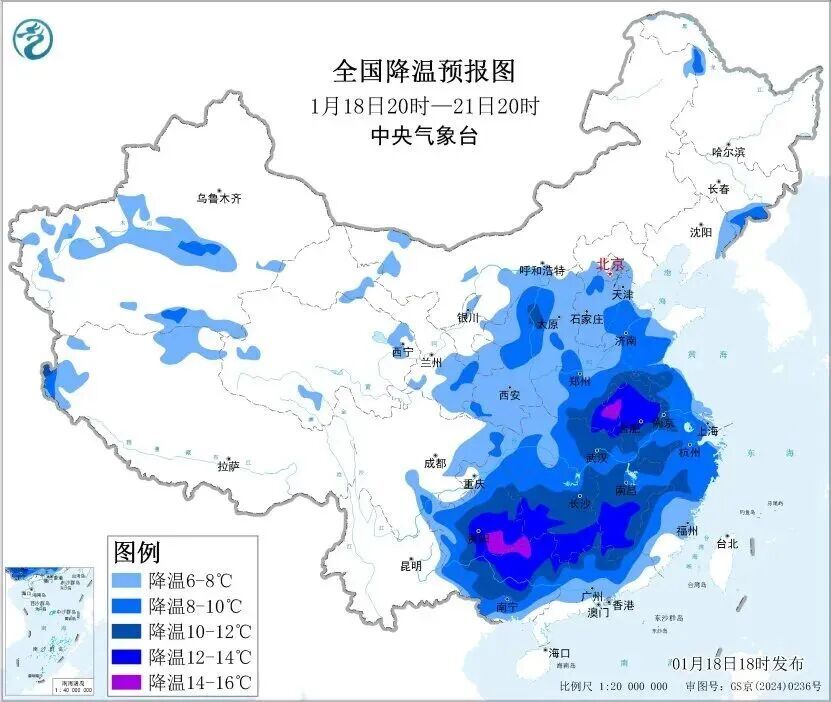 今天18日),内蒙古、西北地区、华北及河南、湖北、湖南等地气温大幅下降,河南中北部部分地区出现冻雨。中央气象台预计,未来三天,寒潮继续影响中东部地区,带来大风降温和大范围雨雪,部分地区有冻雨。中央气象
...[详细]
今天18日),内蒙古、西北地区、华北及河南、湖北、湖南等地气温大幅下降,河南中北部部分地区出现冻雨。中央气象台预计,未来三天,寒潮继续影响中东部地区,带来大风降温和大范围雨雪,部分地区有冻雨。中央气象
...[详细]
-
 size: 14px; line-height: 28px;">实施即时结算改革后,医院每天都能按比例收到上一天发生的住院医保基金。记者从安徽省医保局获悉,自2025年1月1日起,安徽省对定点医药机构
...[详细]
size: 14px; line-height: 28px;">实施即时结算改革后,医院每天都能按比例收到上一天发生的住院医保基金。记者从安徽省医保局获悉,自2025年1月1日起,安徽省对定点医药机构
...[详细]
-
内蒙古包钢股份一板材厂爆炸事故目前致5人失联 暂未报告有人员死亡
 记者从内蒙古自治区包头市应急管理局等多个部门获悉,在18日15时许发生的包钢股份一板材厂爆炸事故中,目前初步摸排5人失联,暂未报告有人员死亡,受伤人数仍在统计中。自治区和包头市相关救援力量已赶赴现场救
...[详细]
记者从内蒙古自治区包头市应急管理局等多个部门获悉,在18日15时许发生的包钢股份一板材厂爆炸事故中,目前初步摸排5人失联,暂未报告有人员死亡,受伤人数仍在统计中。自治区和包头市相关救援力量已赶赴现场救
...[详细]
-
 近年来,直播电商以其互动性强、传播范围广、交易效率高等特点,成为食品销售的重要方式。与此同时,食品直播电商领域虚假宣传、假冒伪劣等乱象也逐渐增多,如何规范这个市场?1月16日,国家市场监管总局向社会发
...[详细]
近年来,直播电商以其互动性强、传播范围广、交易效率高等特点,成为食品销售的重要方式。与此同时,食品直播电商领域虚假宣传、假冒伪劣等乱象也逐渐增多,如何规范这个市场?1月16日,国家市场监管总局向社会发
...[详细]
-
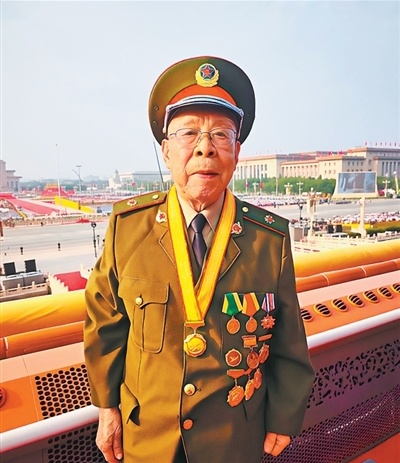 还记得九三阅兵天安门城楼上敬礼的老兵们吗?刘世钺就是其中一位刘老是医院的眼科老主任也曾是一名军医这两天,他正忙着对中国人民解放军白求恩国际和平医院眼科大夫们进行年度考核他走进坐满医生的会议室里挨个点名
...[详细]
还记得九三阅兵天安门城楼上敬礼的老兵们吗?刘世钺就是其中一位刘老是医院的眼科老主任也曾是一名军医这两天,他正忙着对中国人民解放军白求恩国际和平医院眼科大夫们进行年度考核他走进坐满医生的会议室里挨个点名
...[详细]
-
 ze: 14px; line-height: 28px;">在浙江杭州钱塘江北岸两公里处,坐落着全国首个跨境电子商务综合试验区。作为跨境电商的“初创地”和“试验田”,中国杭州)跨境电子商务综合试验区以
...[详细]
ze: 14px; line-height: 28px;">在浙江杭州钱塘江北岸两公里处,坐落着全国首个跨境电子商务综合试验区。作为跨境电商的“初创地”和“试验田”,中国杭州)跨境电子商务综合试验区以
...[详细]
-
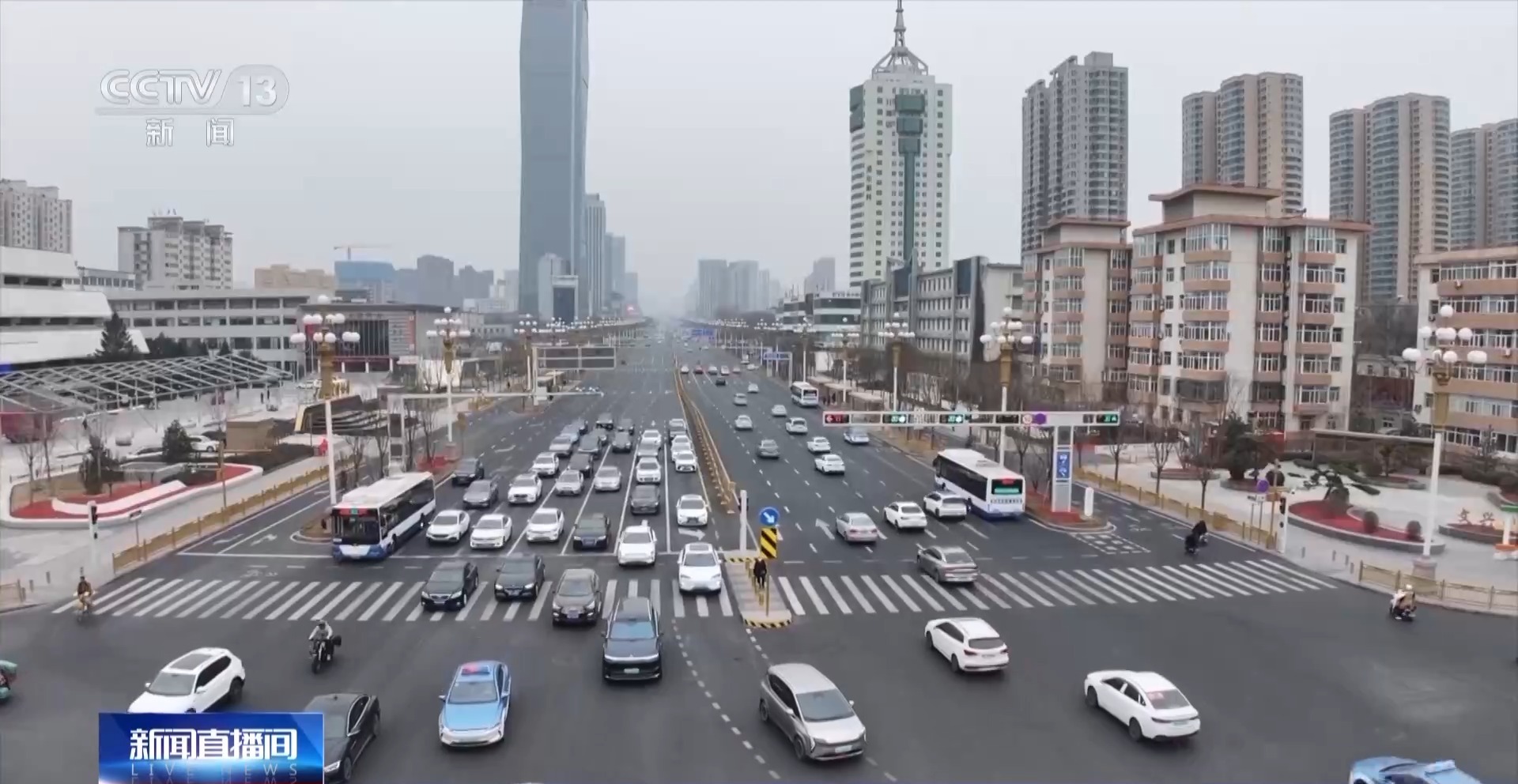 昨天至今天上午,北京市出现降雪天气。此次降雪的雪花比较大,并且非常蓬松,引发了网友的热议。这是什么原因造成的呢?未来几天雨雪寒潮天气有什么特点?来看专家的分析。专家介绍,这是一场华北地区典型的回流降雪
...[详细]
昨天至今天上午,北京市出现降雪天气。此次降雪的雪花比较大,并且非常蓬松,引发了网友的热议。这是什么原因造成的呢?未来几天雨雪寒潮天气有什么特点?来看专家的分析。专家介绍,这是一场华北地区典型的回流降雪
...[详细]